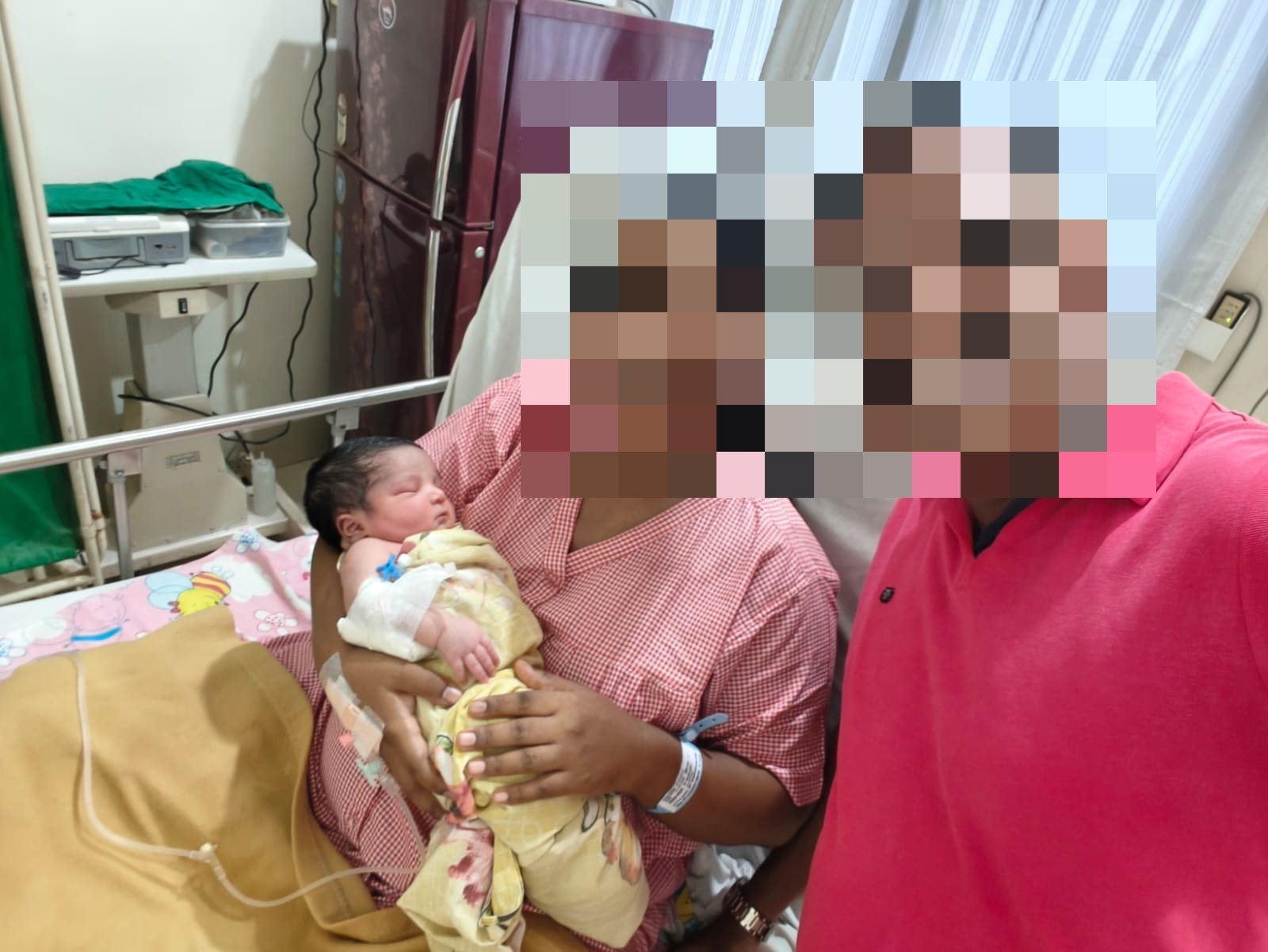
Hyderabad, August 22, 2026: Doctors at KIMS Cuddles, Secunderabad, have successfully managed a high-risk pregnancy in a woman with a history of two consecutive second-trimester pregnancy losses, enabling her to carry her third pregnancy to term and deliver a healthy baby boy. The patient, who had previously undergone a conventional vaginal McDonald cerclage that failed to prevent pregnancy loss, underwent a laparoscopic trans-abdominal cerclage (TAC) at 14 weeks of gestation.
The procedure was performed by Dr N. Bindu Priya, Senior Consultant and Lead Urogynaecologist, along with Dr Sindhura and Dr Sai Snehitha.
The woman had lost her first pregnancy at 16 weeks and her second at 18 weeks. During her second pregnancy, a McDonald cerclage had been placed through the vaginal route to reinforce the cervix. However, despite the intervention, the pregnancy could not be sustained.
Explaining the condition, Dr Bindu Priya said some women have a weakened cervix that is unable to remain closed as the pregnancy progresses. This condition, known as cervical insufficiency, can cause the cervix to open prematurely without significant pain or contractions, potentially resulting in a miscarriage or extremely preterm delivery during the second trimester.
“Given the history of recurrent second-trimester pregnancy losses and failure of a previous vaginal cerclage, we opted for a laparoscopic trans-abdominal cerclage at 14 weeks in this pregnancy. The stitch was placed at the junction of the uterus and cervix to provide stronger support and prevent premature opening of the cervix,” she said.
Unlike conventional open surgery, the laparoscopic approach involves making small incisions through which specialised instruments are inserted. The suture placed around the cervico-uterine junction acts as a strong supportive band, helping the cervix remain closed throughout the pregnancy.
Following the procedure, the patient was closely monitored throughout the pregnancy. She subsequently completed the full term of pregnancy and delivered a healthy baby boy.
Dr Bindu Priya said that trans-abdominal cerclage can be considered in carefully selected patients, particularly those with a history of second-trimester losses and failure of a previous vaginal cerclage. “Women who have experienced recurrent pregnancy losses in the second trimester should undergo evaluation and receive specialised care in subsequent pregnancies. In appropriately selected cases where a conventional cerclage has failed, trans-abdominal cerclage may offer an opportunity to improve the chances of sustaining the pregnancy,” she said.
The doctors emphasised that the choice of cerclage and the timing of intervention should be individualised based on the woman’s previous pregnancy history, cervical condition and overall clinical assessment.
The medical team advised women with a history of repeated pregnancy losses, particularly those occurring around the third or fourth month of pregnancy and beyond, to seek specialist consultation early in their next pregnancy for appropriate evaluation and monitoring.