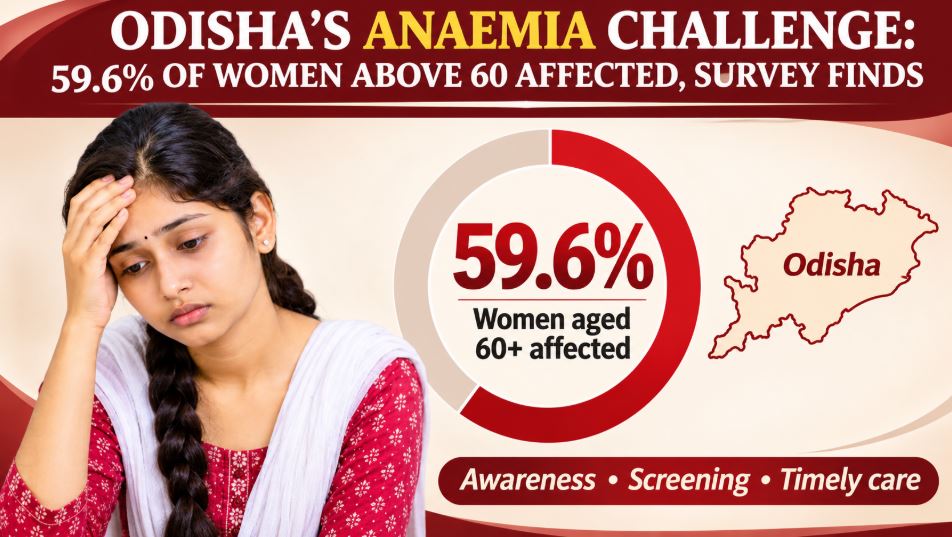
Bhubaneswar, Nov 26 (UDN): Anaemia continues to pose a major public health challenge in Odisha, affecting more than half of adult women in the State, with the prevalence climbing to 59.6% among women aged above 60 years, according to a recent national nutrition survey.
Pic Credit: x.com/HFWOdisha
The findings of the 2023–25 SAMPADA survey, conducted by the Indian Council of Medical Research-National Institute of Nutrition (ICMR-NIN), highlight the continuing burden of anaemia across different age groups and underline the need for stronger nutritional interventions and healthcare support.
The data also reveal that women and elderly people remain among the most vulnerable sections of the population.
Odisha Women Face Significant Anaemia Burden
According to the survey, 53.4% of non-pregnant and non-lactating women aged 20–59 years in Odisha are affected by anaemia. The corresponding national figure stands at 54.8%.
Among women in the 15–49 age group, the prevalence in Odisha is 51.3%, compared with the national average of 55.9%.
However, the situation is more concerning among elderly women. As many as 59.6% of women above 60 years in Odisha are anaemic, exceeding the national average of 55.7%.
The survey also found that 45% of adolescent girls aged 10–19 years in the State suffer from the condition, pointing to the importance of addressing nutritional deficiencies from an early age.
Children and Men Also Affected
The findings indicate that anaemia is not limited to women. A considerable proportion of children and men in Odisha are also affected.
Among children aged 12–59 months, the prevalence stands at 35.8%, lower than the national average of 41.8%. For children in the 5–9 age group, the figure is 21.5%.
Meanwhile, 17.5% of adolescent boys in the State are affected by anaemia.
The situation among elderly men is also a matter of concern. The survey recorded a prevalence of 46.2% among men above 60 years, compared with 22.7% in the 20–59 age group. Both figures are higher than their respective national averages.
Iron Deficiency Accounts for a Major Share
The survey findings also point towards nutritional deficiencies as an important contributor to the anaemia burden.
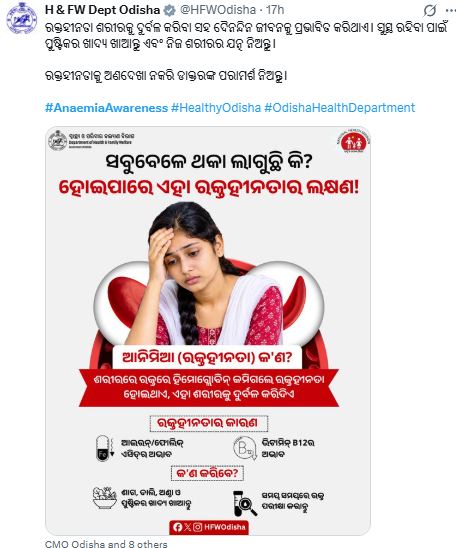
Iron deficiency accounts for approximately half of anaemia cases among vulnerable population groups. Deficiencies of vitamin B12 and folate, meanwhile, contribute a relatively smaller share to the overall anaemia burden in India.
This underlines the importance of identifying the specific nutritional deficiencies responsible for anaemia rather than relying on a uniform treatment approach.
Targeted Intervention Needed
The findings highlight the need for a more focused approach to tackling anaemia in Odisha, particularly among adolescent girls, adult women and senior citizens.
Health experts generally emphasise the importance of balanced nutrition, regular screening, timely diagnosis and appropriate treatment. Identifying the underlying cause is equally important, as anaemia can result from different nutritional deficiencies and other health conditions.
With nearly six out of every ten elderly women in Odisha affected, the latest survey presents a significant public health concern and reinforces the need to strengthen nutrition awareness, preventive healthcare and screening services across the State.