
Manesar, Oct 16: In a significant clinical achievement, Fortis Hospital Manesar successfully treated three children from Uzbekistan suffering from severe, drug-resistant epilepsy, offering renewed hope to patients, who continue to experience frequent seizures despite multiple medications. Combining advanced neuromodulation technology with precision microsurgical interventions, the multidisciplinary team at Fortis Manesar, adopted tailored treatment approaches to address the complex neurological conditions in the three children.
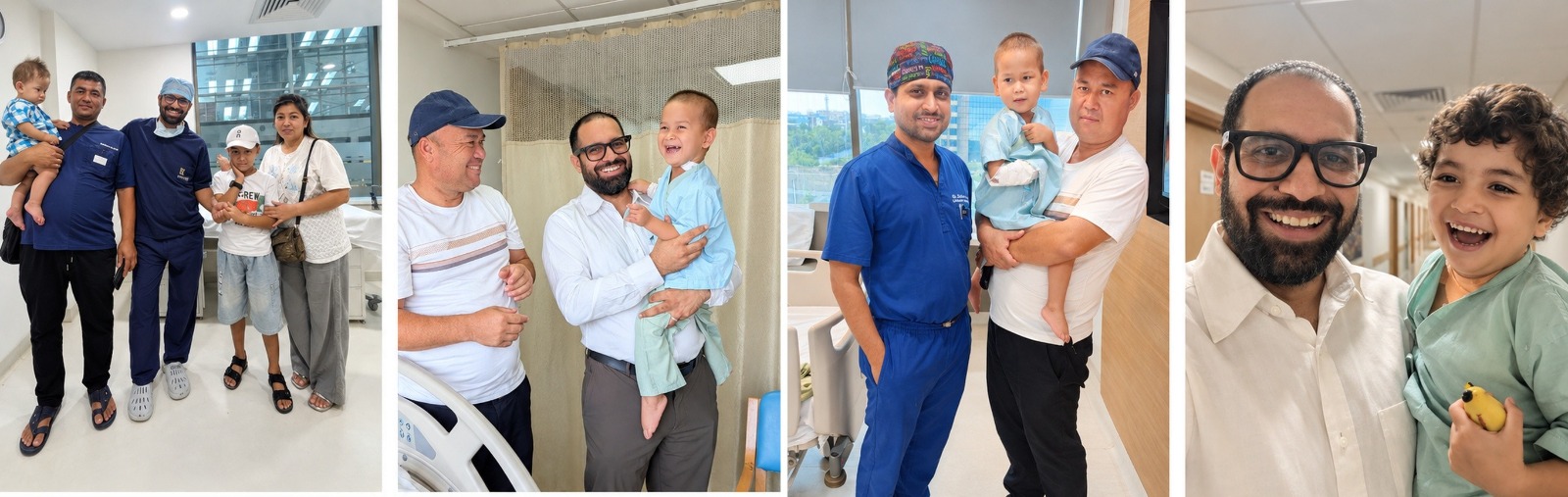
The cases were managed by a team led by Dr. Nishant Yagnick, Senior Consultant - Department of Neurosurgery, Fortis Manesar and Dr. Sidharth Agarwal - Associate Consultant, Neurosurgery, Fortis Manesar. Following detailed evaluation, two children underwent Vagus Nerve Stimulation implantation, while the third underwent a specialised microsurgical brain procedure. Early follow-up showed encouraging improvements in seizure control.
Three-year-old Mhuammad Ziyo Khojakulov had been experiencing significant developmental delays, speech difficulties and three to four episodes of seizures every day, including recurrent episodes at night. Despite prolonged treatment with multiple anti-seizure medications, his seizures remained uncontrolled. To help control his drug-resistant seizures, doctors performed a specialized nerve-stimulation implant procedure under general anesthesia. The procedure was completed successfully, with no seizures reported following the intervention. The treatment offers renewed hope for improved seizure control and developmental progress, potentially enabling him to engage more fully in everyday activities, including schooling, as he grows.
In another case, Baby Shakhlo Kuvandikova battled frequent brief blackouts and blank stares, occurring multiple times every minute, alongside hyperactivity challenges. Her daily safety and normal activities were heavily restricted. Following a successful nerve-stimulating implant procedure, her seizure frequency dropped dramatically, allowing her to enjoy a safer and more active childhood.
In a third such case, Mr. Ibrohimjon Pardabaev had a history of birth-related weakness affecting one side of his body and subsequently developed seizures that remained uncontrolled despite standard medical treatment. The persistent seizures significantly affected his daily functioning and quality of life. To address his condition, the medical team performed a specialized four-hour microsurgical brain procedure under general anesthesia. Following the surgery, he experienced a significant reduction in seizure frequency, enabling doctors to reduce his anti-seizure medication from three drugs to just one. He also showed noticeable improvements in speech and hand movement, marking encouraging progress in his recovery and overall neurological function.
With a significant reduction in seizure frequencies, the young patients are now undergoing a gradual reduction in their medication under close medical supervision. Advances in neuromodulation technology offer the added advantage of supporting long-term seizure management, with device-based therapies designed to accommodate their needs as they grow. These developments offer renewed hope for improved quality of life, greater independence and a future with fewer limitations imposed by their condition.
Dr. Nishant Yagnick, Senior Consultant, Department of Neurosurgery, Fortis Hospital Manesar, said,
“Drug-resistant epilepsy in children requires detailed evaluation to understand the underlying condition and identify the most appropriate treatment. In these cases, we used nerve stimulation and specialised microscopic brain surgery based on each child's medical needs. The early outcomes have been encouraging, with better seizure control and reduced medication requirements. We aim to help children achieve sustained seizure control, ideally with minimal or no medication, wherever clinically appropriate. Timely medical intervention and the correct line of treatment can make a meaningful difference to their quality of life.”
Dr. Sidharth Agarwal, Associate Consultant, Department of Neurosurgery, Fortis Hospital Manesar, said,
“Frequent seizures can affect a child's development, sleep, communication, education and ability to participate in everyday activities. Advanced treatment options such as Vagus Nerve Stimulation therapy (VNS) and epilepsy surgery can help selected children who do not respond adequately to medication. While continued monitoring and long-term follow-up remain essential, the improvements seen in these cases are encouraging. Better seizure control can potentially allow children to participate more confidently in school, play and other activities as they grow.”
Mr. Indrajeet Kumar Singh, Facility Director, Fortis Hospital Manesar, said,
“These cases underscore, Fortis Manesar’s commitment to delivering advanced, specialized care to children with complex neurological conditions. Managing drug-resistant epilepsy requires a comprehensive approach involving accurate diagnosis, careful evaluation and individualized treatment strategies. By combining advanced neuromodulation techniques with precision microsurgery, we were able to offer these young patients new treatment options. The progress observed so far is encouraging, and we remain committed to supporting their long-term recovery through continuous medical supervision, regular follow-ups and personalized care.
