Gandhinagar, Oct 01: Regional Centre for Biotechnology-Department of Biotechnology, The Indian AI Research Organisation, and Indian Institute of Technology Gandhinagar convened a two-day workshop on Digital Twins for Planetary Health on September 25–26, 2026, at IIT Gandhinagar, bringing together approximately 50 invited researchers, scientists and experts from across India's scientific and technology ecosystem.
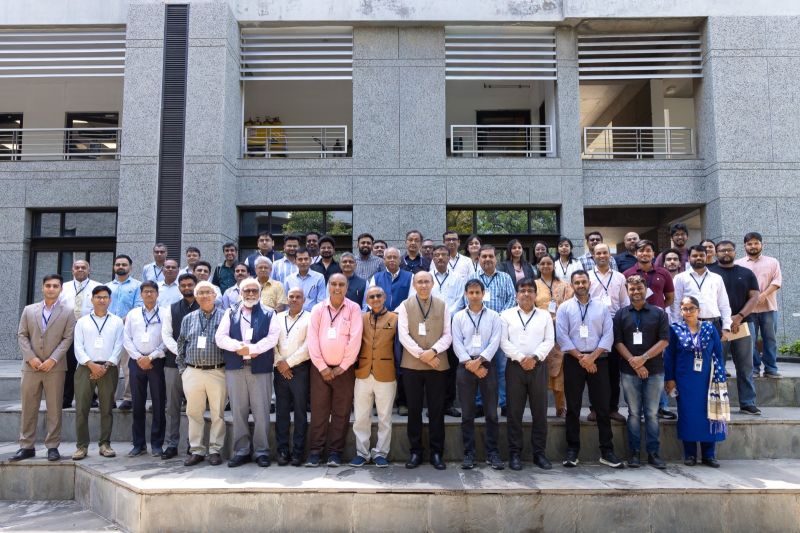
The discussions were intended to contribute to a joint white paper and a 5–7-year roadmap for Digital Twins for Planetary Health, while helping identify priority application areas, potential research collaborations and institutional capabilities required to advance the field in India.
The workshop was inaugurated with welcome remarks from senior scientists and dignitaries including Prof. Vimal Mishra of IIT Gandhinagar; Dr. Debasisa Mohanty, Dean, RCB; and Dr. Amit Sheth, Founding Director, IAIRO. The meeting featured a keynote address by Dr. Rajesh S. Gokhale, Secretary, Department of Biotechnology, Government of India; Chairman, BIRAC; and DG, BRIC, on “From Biological Data to Predictive Design and Real-World Decisions.”
Commenting on the importance of digital twins for India's research ecosystem, Dr. Rajesh S. Gokhale, Secretary, Department of Biotechnology and Director General, BRIC, said:
“Digital twins offer an opportunity to bring together advances in biotechnology, computational modelling and artificial intelligence to address complex challenges across human health and the environment. Building the necessary research ecosystem will require close collaboration between scientific institutions, technology organisations and industry.”
The discussions focused on two interconnected areas: biotechnology and health, including applications spanning genes, genomes, drug discovery and clinical research; and environment and urban systems, including climate, heat stress and environmental exposure. The workshop also featured perspectives from Prof. Dev Niyogi, Founding Member, IAIRO, and Prof. Ramesh Jain, Founding Member, IAIRO, who discussed broader frameworks for digital twins and their applications across different scales, from genes and individuals to populations, cities and environmental systems. A central theme was understanding how environmental conditions influence biological responses and health outcomes, and how integrated modelling and AI capabilities could support better research and decision-making.
Highlighting the importance of an interdisciplinary approach, Prof. Vimal Mishra, Dean, Research and Development, IIT Gandhinagar, said:
“Understanding the relationship between environmental conditions, climate and human health requires an integrated, multidisciplinary approach. Digital twins can provide a framework for connecting environmental data with models of biological and health outcomes, creating opportunities for more informed research and decision-making.”
Emphasising the role of AI in enabling these applications, Dr. Amit Sheth, Founding Director, Indian AI Research Organisation, said:
“Building effective solutions for planetary health requires us to bring together AI, scientific models, data and domain expertise in a way that can address real-world problems. The discussions at the workshop focused on how these capabilities can work together across health, biotechnology and environmental systems, and what it will take to move from individual research efforts towards practical, deployable solutions.”
The workshop also explored the capabilities required to translate digital twin concepts into practical applications, including scientific data integration, AI, computational infrastructure and domain expertise. Working group discussions examined potential use cases, existing research capabilities, data gaps and opportunities for collaboration across participating institutions.