Chennai, Oct 01: Indian Institute of Technology Madras and Human Welfare Association are launching a new initiative to strengthen artisan empowerment.
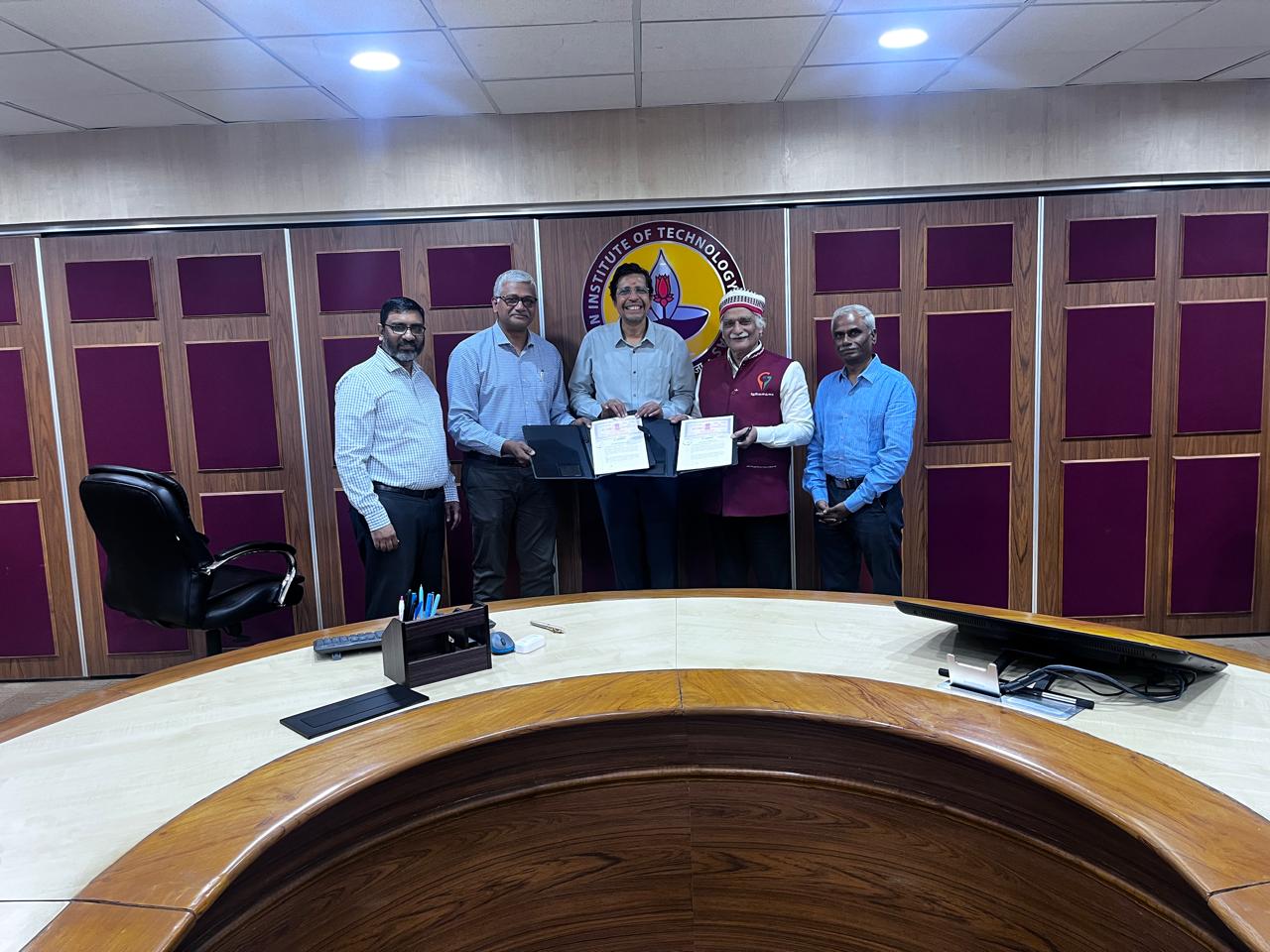
They are joining hands to promote technology-enabled solutions for the authentication, traceability and sustainable development of India’s Geographical Indication-tagged crafts and products.
The collaboration will focus on developing practical applications in digital authentication, product traceability, documentation and technology-based interventions for GI-tagged products. These solutions will help artisans and producer communities establish product authenticity, enhance consumer confidence, protect cultural identity and access sustainable livelihood opportunities.
A MoU towards this collaboration was signed recently by Dr. Rajni Kant, General Secretary, Human Welfare Association and Prof. Manu Santhanam, Dean, IIT Madras, in the presence of Prof. V. Kamakoti, Director, IIT Madras, Project Coordinators Prof. M. Manivannan and Prof. John Augustine
Highlighting the important outcomes envisaged, Prof. M. Manivannan, Department of Applied Mechanics and Biomedical Engineering, IIT Madras, said,
“Artisans form India’s second-largest population; empowering them with technology can drive transformative impact. At IIT Madras, we are committed to advancing this vision of a Viksit Bharat by the use of technology.”
Prof. John Augustine, Department of Computer Science and Engineering, said,
“Buyers value authenticity but cannot verify it. Our goal is to build a shared trust infrastructure that lets anyone verify an artisan's identity and a product's origin, and thereby enable India to leapfrog on trust, and on the consumer engagement that follows from it.”
The initiative will be supported by Artisan Empowerment Lab at IIT Madras, which is developing innovative and scalable technological approaches to address challenges faced by artisans, producer groups and other stakeholders in the GI ecosystem.
Further, Dr. Rajni Kant, popularly Known as ‘GI Man of India’ and Founder of Human Welfare Association, said,
“This project and its interventions will boost the Atmanirbhar Bharat (local-to-global) and Viksit Bharat campaigns at the international level. Millions of artisans, weavers, producers, farmers, and women will benefit in the long run once this project is scaled up nationally.”
Dr. Rajni Kant played a significant role in helping secure numerous GI tags for traditional handicrafts and local artisan communities across India. His work has contributed to the recognition and protection of regional products while supporting artisan livelihoods, traditional knowledge and cultural identity.
Through the partnership, HWA and IIT Madras will explore solutions that can help authenticate GI-tagged products and trace their journey, enabling artisans and producer communities to demonstrate the origin and authenticity of their products while providing consumers with greater confidence in what they purchase.
The collaboration will bring together researchers, artisans, farmers and producer communities, industry partners, government bodies and social-development organisations to develop practical models for the preservation, recognition, authentication and sustainable growth of India’s diverse craft and agricultural heritage.
By combining HWA’s ground-level engagement with artisan communities and IIT Madras’ research and technology capabilities, the MoU seeks to create technology-enabled pathways that connect India’s traditional knowledge systems with contemporary applications, generating social and economic value for producer communities.
